

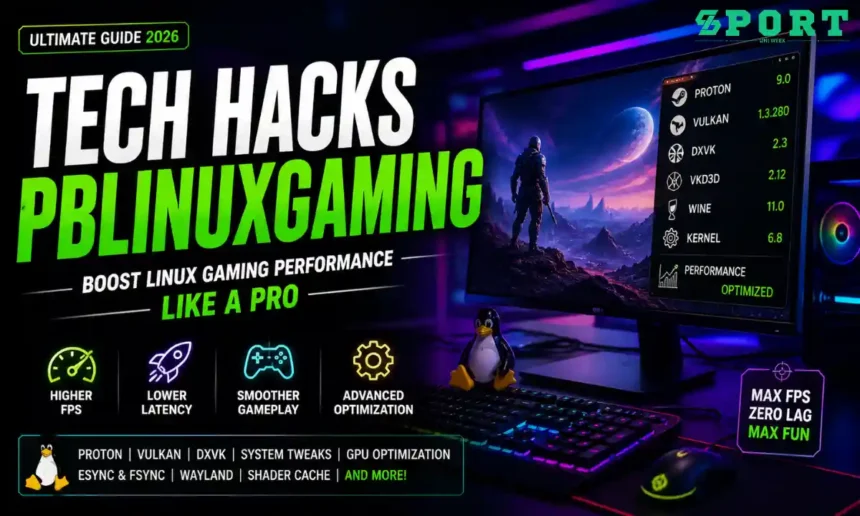
Linux gaming has matured into a high-performance ecosystem where precision tuning can rival or exceed traditional setups. With the rise of Proton, Vulkan, and modern kernel optimizations, Linux is no longer a workaround it is a serious platform for competitive and AAA gaming. This guide on Tech Hacks PBLinuxGaming delivers insights, focusing on real-world performance gains, system-level tuning, and advanced configurations used by experienced Linux gamers.
What is PBLinuxGaming?
PBLinuxGaming stands for performance based Linux gaming a methodology that focuses on extracting maximum efficiency from hardware and software. It combines compatibility layers, kernel tweaks, GPU tuning, and system optimization to deliver smoother gameplay, higher FPS, and reduced latency.
Why Linux is Now a Serious Gaming Platform
Modern Linux distributions provide deep control over system resources, allowing users to eliminate unnecessary overhead and fine-tune performance. With Vulkan-based rendering and Proton’s compatibility layer, thousands of Windows games are now playable with competitive performance. Combined with stability and security, Linux has become a preferred choice for power users.
Foundation: System Setup and Optimization
Choosing the Right Distribution
Performance begins with a clean and efficient base system. Distributions like Pop!_OS, Ubuntu, and Arch Linux are widely used for gaming due to their driver support and customization capabilities. A minimal installation reduces background processes and frees up resources for gaming workloads.
Keeping GPU Drivers Updated
GPU drivers directly impact performance and stability. NVIDIA users should rely on proprietary drivers for best results, while AMD users benefit from strong open-source support. Regular updates ensure compatibility with the latest Vulkan improvements.
Enabling GameMode for Automatic Optimization
GameMode dynamically adjusts system parameters during gameplay. It prioritizes CPU scheduling, reduces background activity, and ensures consistent performance without manual intervention.
Vulkan, DXVK, and Modern Rendering Optimization
Role of Vulkan in Linux Gaming
Vulkan is a low-level graphics API designed for high efficiency. It reduces CPU overhead and allows better hardware utilization, resulting in improved frame rates and smoother gameplay.
DXVK and VKD3D Translation Layers
DXVK converts DirectX 9, 10, and 11 calls into Vulkan, while VKD3D handles DirectX 12. These layers are critical for running Windows games on Linux through Proton. Proper configuration can significantly reduce stuttering and improve frame consistency.
Performance Tweaks for Translation Layers
Advanced users can apply environment variables to enhance performance. These tweaks reduce shader stutter, improve frame pacing, and unlock additional graphical features such as ray tracing in supported games.
Kernel-Level and System Performance Tweaks
Esync and Fsync Optimization
Esync and Fsync reduce CPU overhead by improving how system events are handled. Fsync operates at the kernel level and provides superior performance in demanding games. Enabling these features can lead to noticeable FPS improvements and smoother frame delivery.
Using a Performance-Optimized Kernel
Custom kernels such as Zen Kernel are designed for responsiveness and low latency. They improve input handling and reduce micro-stutters, making them ideal for gaming environments.
CPU and GPU Deep Optimization
CPU Governor Configuration
Setting the CPU governor to performance mode ensures consistent maximum frequency during gameplay. This prevents frame drops caused by dynamic scaling and power-saving features.
GPU Tuning and Overclocking
Controlled GPU tuning can deliver measurable performance gains. Tools like CoreCtrl and GreenWithEnvy allow safe adjustments to clock speeds and power limits, helping to extract additional performance without compromising stability.
Display Server Optimization: Wayland vs X11
Choosing the right display server impacts latency and compatibility. Wayland offers modern architecture and improved efficiency, especially for AMD GPUs. X11 remains more stable for NVIDIA users due to driver maturity. Selecting the appropriate environment ensures optimal input response and graphical performance.
Eliminating Stutter: Shader Cache Optimization
Shader compilation is a common cause of stuttering in Linux gaming. Enabling shader pre-caching ensures that shaders are compiled before gameplay, resulting in smoother performance and reduced frame drops during intense scenes.
Storage and Data Throughput Optimization
Solid-state drives significantly improve load times and asset streaming. Optimizing the I/O scheduler further enhances data access speed, reducing in-game lag and improving responsiveness in open-world environments.
Audio Optimization with PipeWire
PipeWire is a modern audio system that offers lower latency and better synchronization compared to older solutions. It enhances both gaming and streaming experiences by providing stable and high-quality audio performance.
Multi-GPU and Hybrid Graphics Optimization
For systems with integrated and dedicated GPUs, proper configuration is essential. Ensuring that games run on the dedicated GPU prevents performance bottlenecks and maximizes graphical output.
Essential Tools for Advanced Linux Gaming
Lutris
A versatile platform that simplifies installation and management of games from multiple sources, including emulators and non-Steam titles.
MangoHud
A real-time performance overlay that displays FPS, temperatures, and resource usage, helping users identify and resolve bottlenecks.
Steam Play and Proton
Steam Play integrates Proton, enabling seamless access to Windows games on Linux. It remains the backbone of modern Linux gaming.
ProtonDB
A community-driven database that provides compatibility ratings and optimized settings for thousands of games, making it an essential research tool.
Steam Deck and the Future of Linux Gaming
The success of the Steam Deck has accelerated Linux gaming adoption worldwide. Built on SteamOS, it demonstrates how optimized Linux environments can deliver console-level performance. This has encouraged developers to improve Linux support, strengthening the ecosystem.
Troubleshooting and Performance Stability
Game Launch Issues
Compatibility layers may require adjustments. Testing different Proton versions and verifying dependencies can resolve most launch problems.
Low FPS and Performance Drops
Ensuring correct GPU usage, enabling GameMode, and optimizing system settings can significantly improve performance.
Audio and Input Issues
Updating drivers and switching to modern audio systems like PipeWire can resolve latency and synchronization problems.
Future Outlook
Linux gaming is evolving rapidly with continuous improvements in Vulkan, Proton, and hardware support. As more developers embrace cross-platform technologies, Linux is expected to become a mainstream gaming platform with competitive performance and broader compatibility.
Conclusion
Tech Hacks PBLinuxGaming is about mastering control over your system to achieve peak gaming performance. By combining modern tools, advanced configurations, and system-level optimizations, Linux can deliver a powerful and efficient gaming experience. With the right approach, it is possible to achieve high FPS, low latency, and exceptional stability making Linux a top-tier choice for serious gamers.
FAQs
What is PBLinuxGaming?
It is a performance-focused approach to gaming on Linux using advanced optimization techniques.
Is Linux gaming reliable in 2026?
Yes, Linux now supports a wide range of modern games with stable and competitive performance.
What improves performance the most?
Vulkan optimization, updated GPU drivers, and CPU performance tuning have the biggest impact.
Can Linux handle AAA games?
Yes, many AAA titles run efficiently using Proton and Vulkan-based rendering.
Which tool is essential for compatibility checks?
ProtonDB is widely used to verify game compatibility and recommended settings.
Also, Read About: Green Bay Packers VS Philadelphia Eagles Match Player Stats, Box Score, Game Summary & More